



Paraquat is banned in 70+ countries, but still legal in the US
For the Parkinson’s community, this isn’t abstract science, it’s personal reality. Studies have shown that people exposed to paraquat are more likely to develop Parkinson’s disease (PD) than those who are not exposed. And thousands of families across the U.S. have now pursued legal claims against manufacturers, alleging that exposure to paraquat caused or contributed to their loved one’s diagnosis of PD.
Paraquat, a widely-used, highly toxic herbicide, remains legal in the United States despite a growing body of evidence connecting it to Parkinson’s disease and other severe health risks. This chemical is banned in more than 70 countries around the world, yet here at home, its use is still permitted under federal law.
EPA Paraquat Review: A Step, But Not Enough
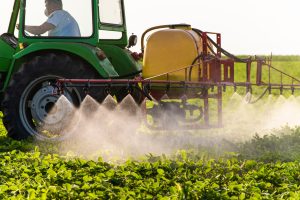
In early January 2026, Environmental Protection Agency (EPA) Administrator Lee Zeldin posted on social media that the agency would “freshly reassess the safety” of paraquat and require manufacturers to demonstrate that current uses are safe in real-world conditions.
This announcement sparked headlines and intense discussion within public health and farmworker advocacy circles. But advocates caution that:
- It does not ban paraquat outright. Instead, it signals a regulatory review and a demand for more data from manufacturers.
- There’s no guarantee the review will lead to meaningful restrictions or align U.S. policy with the many countries that have already outlawed the chemical due to health concerns.
This EPA action is a starting point, not a finish line. We must push the EPA to pursue a thorough and unbiased approach to its assessment of paraquat.
State Paraquat Bans: Leading the Fight Where Federal Policy Falls Short
As federal policy remains uncertain, states across the country are stepping up to protect their communities via state-based legislation that seeks to significantly restrict or ban paraquat. The ten states below are leading the way. You can click on the name of the bill they are hoping to pass for more in-depth information (where available).
Hawai’i – HB 1285/SB 352
- Requires the Department of Agriculture to use consistent units of measurement in its summary to the public on the amounts of restricted-use pesticides used. Establishes a one-half mile buffer zone for pesticides around schools and state and county public parks.
Illinois – SB3161
- Amends the Illinois Pesticide Act. Provides that, except as expressly authorized under specific provisions of the Act, no person shall distribute, sell, offer for sale, or use in the State any herbicide product containing paraquat dichloride or any other chemical form of paraquat. Requires all persons thaqt use, distribute, or sell paraquat in Illinois to report certain information to the Department of Agriculture. Directs the Department of Agriculture to adopt any rules necessary to implement and administer these provisions. Effective immediately.
Iowa – SB 2316
- A bill for an act prohibiting a pesticide containing paraquat, making penalties applicable, and including effective date provisions.
Minnesota – HF 3965/SF 4160
- Sale and use of paraquat dichloride prohibited; commissioner required to collect and dispose of paraquat dichloride; and report required.
Missouri – HB 2844
- Prohibits the use of paraquat beginning January 1, 2027, with specified research exemptions.
New Jersey – Assembly Bill A 5999
- Prohibits certain uses of paraquat dichloride in the state.
New York – Assembly Bill A 10074 / SB 9094
- Prohibits the use of any pesticide product containing paraquat dichloride or any other chemical form of paraquat.
Pennsylvania – HB 1135 / SB 1158
- Bans the use of paraquat by amending the Pennsylvania Pesticide Control Act of 1973 to prohibit the use of the pesticide in the state.
Utah – HB 456
- Prohibits use of paraquat within certain distance of schools.
Vermont – S.176 & H.739
- Prohibits both the sale and use of paraquat-containing herbicides in Vermont. Establishes timelines and enforcement authority for state regulators.
Virginia – HB 1375
- Prohibits or significantly restricts the manufacture, distribution, and use of paraquat in Virginia. Emphasizes worker safety and public health protections.
Washington – SB 6330
- Probits the use of paraquat unless authorized for research conducted under strict safety and reporting protocols.
West Virginia – HB 4907
- Restricts the use of paraquat within 1,000 feet of schools.
We anticipate that as state lawmakers continue to convene in the coming months more bills will be introduced. As new legislation is introduced, we will update this blog post.
Why APDA Is Engaged
The American Parkinson Disease Association (APDA) advocates for policies that can help prevent Parkinson’s where possible and support impacted families. As part of that mission, APDA has called on Congress and the EPA to:
- Recognize and act upon the growing scientific and epidemiological evidence linking paraquat exposure to Parkinson’s.
- Acknowledge that safer alternatives exist and that continued paraquat use poses ongoing risks.
- Move toward ending paraquat use in the U.S. alongside dozens of other nations that have taken stronger action.
This aligns with broader APDA advocacy goals, such as expanding neurological disease tracking and investing in prevention-oriented research.
What’s Next for Paraquat Policy — And How You Can Help
Paraquat policy is at a crossroads. The EPA’s reassessment must not become symbolic. State action is proof that tangible protections are achievable — but they need public support, outreach, and pressure on legislators to finish the job. APDA will be highlighting the importance of this issue when meeting face-to-face with federal officials during the March 2026 Parkinson’s Policy Forum.
Here’s how you — as a Parkinson’s advocate, family member, or concerned citizen — can make an impact:
- Contact your state legislators to inquire about paraquat regulation or bans in your state. If your state is listed above, reach out to us to get involved at advocacy@apdaparkinson.org.
- If you believe your PD diagnosis is the result of exposure to paraquat, share your story with APDA at advocacy@apdaparkinson.org and other advocacy groups to amplify why this matters.
- Ask federal lawmakers to support stronger pesticide oversight and policies that protect public and worker health.
The science is clear: paraquat poses serious threats to neurological health, and policy action must follow.
Tips & Takeaways
- Paraquat, a widely-used, highly toxic herbicide with links to Parkinson’s remains legal in the United States despite being banned in more than 70 countries around the world.
- Ten states (Illinois, Iowa, Missouri, New Jersey, New York, Pennsylvania, Utah, Vermont, Virginia, West Virginia) are taking matters into their own hands and pushing for the ban or restricted use of paraquat at the state level.
- Contact the APDA Public Policy & Advocacy team at advocacy@apdaparkinson.org to learn more about how you can get involved.
- You can also fill out this quick form to make sure you get the latest advocacy news and learn about opportunities to make a difference.
This blog was written by Anne Hubbard, APDA Chief Public Policy Officer.