



Glaucoma is a very common eye condition that affects people as they age. Today, we will delve into this condition and its association with Parkinson’s disease (PD) and PD medications.
What is Glaucoma?
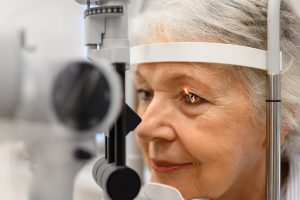
Glaucoma is an eye condition that damages the optic nerve.
Aqueous humor is the fluid located within the eye. Your eye is constantly producing aqueous humor. At the same time, the aqueous humor drains out through a structure in the eye called the drainage angle. Usually there is an exact balance between production and drainage; there is no fluid buildup, and the pressure in the eye remains normal.
Glaucoma occurs if this drainage system is not working properly. The aqueous humor can build up, leading to increased pressure within the eye which can damage the optic nerve. The optic nerve is responsible for carrying visual information from the eye to the brain, so damage to it can cause visual loss. Glaucoma is a leading cause of irreversible blindness, but it can have no symptoms in early stages, gradually causing vision loss, starting with the peripheral vision.
Typically, your ophthalmologist will test your intraocular pressure at a routine office visit to screen for glaucoma.
Open-Angle vs. Closed-Angle Glaucoma
The most common form is open-angle glaucoma, which develops slowly over time and accounts for the vast majority of cases. For open-angle glaucoma, the first line of treatment is eye drops that lower the pressure and usually can manage the condition.
A less common but more urgent form is called closed-angle glaucoma, where drainage of fluid inside the eye becomes suddenly blocked, causing a rapid increase in intraocular pressure that can threaten vision quickly if untreated. For closed angle glaucoma, medications can be used to emergently lower the pressure. Laser therapy or another surgical option is usually required in these cases.
Is Carbidopa/Levodopa Safe with Glaucoma?
One of the most frequent questions asked by people with both glaucoma and PD is whether Carbidopa/levodopa, one of the most commonly prescribed medications for PD, is safe to use. The answer is very dependent on the type of glaucoma a person has. For the vast majority of people with glaucoma – those with open-angle – carbidopa/levodopa is generally considered safe and can often be used under the recommendation and supervision of a physician. However, carbidopa/levodopa is contraindicated (should not be used) for people with closed-angle glaucoma.
The reason for this is that in closed-angle glaucoma, the drainage angle of the eye is already narrowed or even completely blocked. Certain medications, including levodopa, can contribute to dilation of the pupil and changes in fluid dynamics within the eye. In susceptible individuals, this can worsen blockage of the drainage angle and lead to a dangerous increase in intraocular pressure.
This is important because severe closed-angle glaucoma is an eye emergency and can quickly lead to vision loss if not treated right away. For this reason, patients with glaucoma who are diagnosed with PD should discuss the specific type of glaucoma they have with both their neurologist and ophthalmologist before starting or changing PD medications. In most cases, glaucoma can still be managed appropriately while treating PD symptoms as well.
Parkinson’s and Eye Health: Why Regular Exams Matter
It is important to note that visual symptoms are very common in PD and a person with PD can still get garden variety ophthalmologic diseases, just like everyone else. These include glaucoma as well as cataracts and macular degeneration. All of these conditions need to be properly diagnosed and managed.
Therefore, it is important that you have at least yearly visits with an ophthalmologist. These visits will screen you for the common, often treatable eye conditions mentioned above, as well as address PD specific vision problems. If a general ophthalmologist is not familiar with PD-specific vision problems, a visit to a neuro-ophthalmologist, an expert in eye disorders that originate from the brain, nerves, or nervous system (rather than the physical eye itself), may be warranted. Ask your neurologist if a referral to a neuro-ophthalmologist may be beneficial for you.
In a recent review, it was found that approximately 80% of PD patients have some type of ocular disorder. These ocular disorders are wide-ranging and include glaucoma with peripheral vision loss, among others. Interestingly, the report found that glaucoma is more prevalent in PD patients at 16-24% compared to non-PD patients at 7% in two studies.
But there are many other eye conditions that are common in PD which include:
- Eye movement abnormalities and double vision – people with PD can specifically have convergence insufficiency which is a condition in which there is difficulty bringing the eye together to look at something up close, such as when reading.
- Dry eye disease – this can be caused by decreased blinking, which is common in PD.
- Color and contrast impairment – this includes reduced contrast sensitivity, difficulty detecting motion, impaired depth perception, and changes in color vision. One reason for this group of symptoms is that dopamine is used in the retina for normal function. When the dopamine levels drop, the visual processing can also be affected.
- Visual hallucinations – these involve seeing, experiencing, or sensing things that are not really there.
- Visuospatial and visuoperceptual impairment – this is a problem with cognition or thinking that affects a person’s ability to navigate in space. It is a problem with how the brain processes depth, distance, positioning, and orientation of things in the surroundings.
The eye is a window into the brain
Interestingly, the eye can provide clues about brain health. Since the retina is directly connected to the brain and can be imaged easily using noninvasive tools like optical coherence tomography, it can provide insight into signs of declining brain health.
This includes observing the thinning of the retinal nerve fiber layer in PD patients, which has been investigated as a potential early biomarker for neurological diseases, including PD.
Tips & Takeaways
- Glaucoma is a common eye condition in the general population, although studies show that it is slightly more prevalent in people with PD
- Most patients with open-angle glaucoma can still use Sinemet safely
- Levodopa should not be used by people with closed-angle glaucoma, a much less common form of glaucoma
- Talk with your ophthalmologist about which form of glaucoma you have and whether levodopa is safe for you
- Visual symptoms are very common in PD
- The retina may serve as a non-invasive window into the brain’s health
- For additional information on vision and PD, review this blog post and webinar
This blog was written by Clark Jones, PhD, and was reviewed, edited, and approved by Dr. Rebecca Gilbert.