



Perspectives from People with Parkinson’s
At the American Parkinson Disease Association (APDA), we know that some of the most powerful insights about Parkinson’s disease (PD) come from the people affected by it. Their perspectives – the challenges, victories, and hard-won wisdom – can be incredibly valuable to those on a similar path and others who want to learn more about PD.
With this knowledge, we were inspired to create Parkinson’s Perspectives, a blog series dedicated to sharing the real stories and lived experiences of people impacted by PD.
Maintaining a Passion for Music with Parkinson’s
For this installment, we spoke with three inspiring musicians about the role music has played in their lives and how PD has changed the way they approach it. Below, they reflect on the challenges they’ve faced, the creative adjustments that have helped them keep playing, and the lessons they’ve learned along the way.
Note: Responses have been edited for clarity.
Meet the Musicians
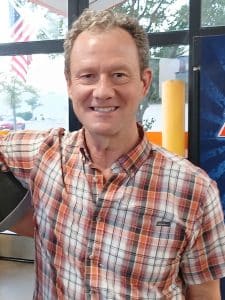
Paul Barr has been living with PD symptoms for more than 15 years and was officially diagnosed in his late 40s. A father of two adult children and grandfather of three, he lives in Berwyn, Illinois, with his wife.
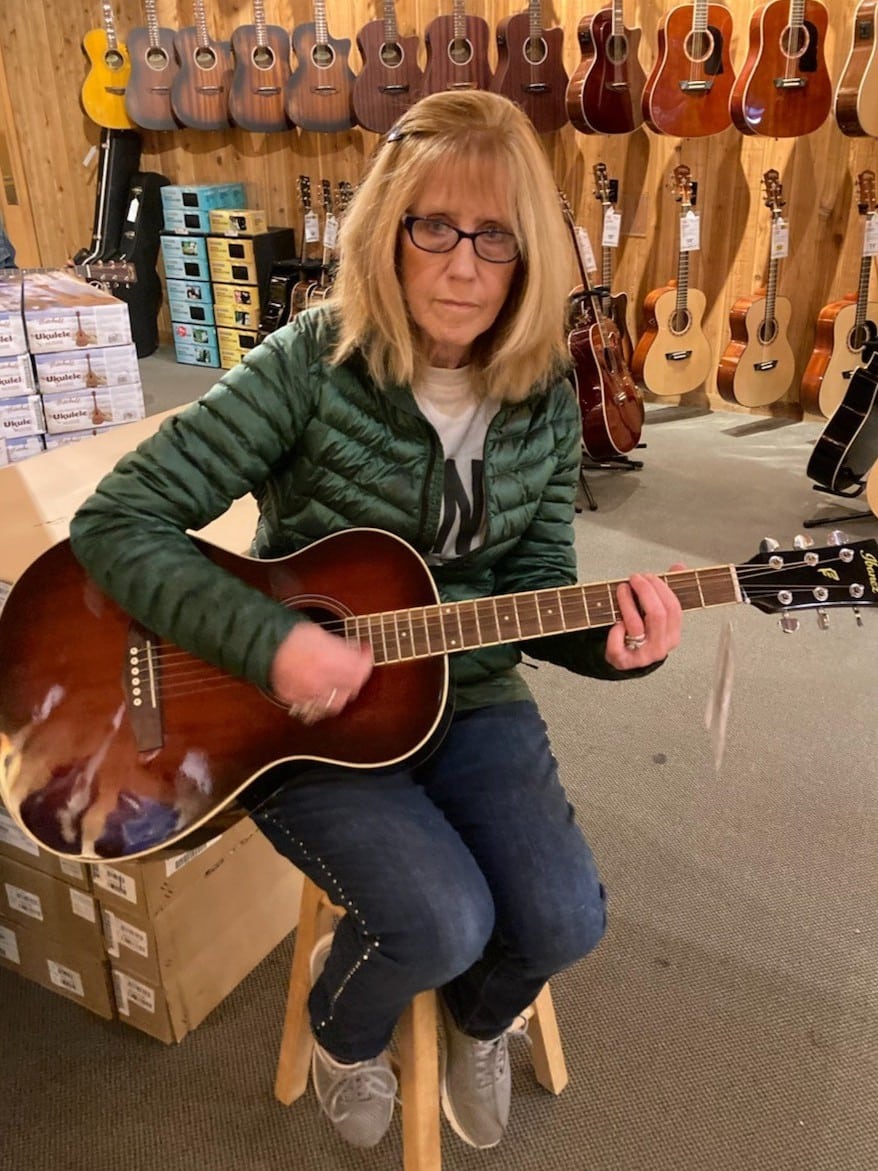
Jean Martinez has been living with PD symptoms for more than 20 years and was officially diagnosed around age 50. She has two adult children and three grandchildren, and she lives with her husband in Oak Lawn, Illinois.
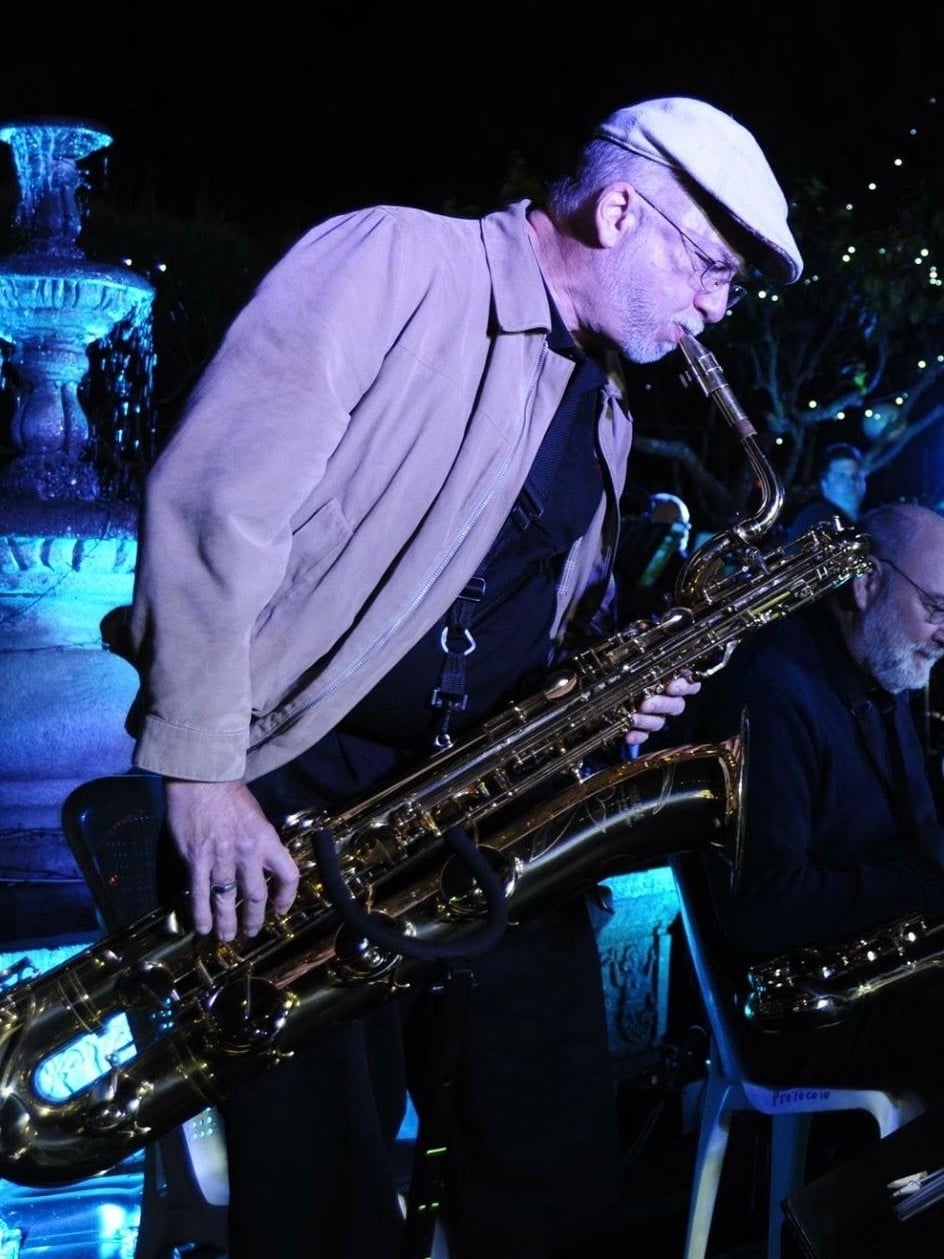
Ron Wincek has been living with PD symptoms for more than 16 years and was officially diagnosed in his late 40s. He has four adult daughters and six grandchildren, and he lives with his wife in Lawrenceville, Georgia.
A Lifetime of Music
Q: How did music first become part of your life, and what role has it played for you over the years?
Paul: I’ve pretty much always been a big fan of music. I developed an interest in listening to popular music when I was 10 or 11, but I didn’t start playing music until I was in my 30s. I started with drums and eventually taught myself bass. Today, I play Americana music with my wife, sometimes as a duo and sometimes with a band. We play open mics with friends pretty much every weekend and have some regular gigs. I’ve also written songs of my own. I love playing music and singing as well.
Jean: I always loved music but was not very good at making it. In kindergarten, my teacher wrote on my report card that I liked to sing but was out of key. Watching The Beatles on The Ed Sullivan Show in 1964 was life changing. I knew I wanted to learn the guitar, but it was years before I could pay for an instrument and lessons. At 19, I started taking lessons and then teaching at a guitar shop. I met my husband in 1980 and taught him how to play. We bonded over music, from watching MTV the day it premiered to attending dozens of concerts over the years – The Rolling Stones, Led Zeppelin, Pink Floyd, Black Sabbath, and Carlos Santana, to name a few. We even started taking our kids to concerts when they were 5-10 years old.
Music is still a big part of our life together. My husband and I play guitar at home, mostly blues, and we have a group of friends who come over sometimes to jam with us. We also collect guitars, and music has become one of the main ways we connect with each other and with other people.
Ron: Music first became part of my life in elementary school. I originally wanted to play the drums, but my band director thought I should play saxophone. A saxophone was too expensive at the time, so my dad and I settled on a clarinet instead. I played clarinet through school, and in 10th grade, a friend told me the jazz band needed a baritone sax player. I gave it a try and fell in love with the instrument. Music continued to be a big part of my life through college, when I also played guitar and became involved in church music. After graduating, I was invited to play in a Christian band in Atlanta, which was one of the reasons I moved there. I eventually stopped playing for about 12 years, but my wife encouraged me to pick up the saxophone again through our church orchestra, and I’ve been playing ever since.
Over the years, music has become an important part of my spiritual life and our family life. I’ve traveled with musical groups around the world and have been on about 20 mission trips, playing in places including Japan, Guatemala, Finland, Estonia, Poland, Hungary, and Brazil. I’ve had the opportunity to meet and connect with people all over the world through music.
The Impact of a Parkinson’s Diagnosis
Q: When were you diagnosed with Parkinson’s, and how did it initially affect your connection to music?
Paul: I can’t remember if there was an immediate reaction to my diagnosis in terms of music, but I did eventually give up playing the banjo, perhaps prematurely, and switched to bass guitar. The three-finger style of banjo I played requires a lot of finger movement, which became difficult with Parkinson’s. Bass is more manageable because I’m generally hitting one string at a time, and it’s still a rhythmic instrument, which I enjoy.
Jean: Since my diagnosis about 20 years ago, music has been both therapeutic and frustrating for me. It has always made me feel good to play – playing guitar relaxes me and can help me forget about everything else for a while. But as my PD has progressed, playing has become a lot more difficult. My hand strength has gotten weaker, and it has become harder and harder to remember and play chords. I used to be able to play for longer jam sessions, like 30-40 minutes consistently, but now I need help to stay sitting upright and maintain stamina for even a short period of time.
Ron: When I was diagnosed, one of my first thoughts was, “I’m not going to be able to play anymore.” The thought of having to give up music was painful because I had no idea how quickly my Parkinson’s would progress or how it would affect me. Fortunately, that hasn’t happened. I’ve been living with PD for about 16 years now, and I’m still playing three or four times a week between church, jazz band rehearsals, and performances. One of the most interesting things I’ve noticed is that my hand can be shaking before I pick up my saxophone, but when I start playing, sometimes the shaking stops.
A year after my diagnosis, I traveled to Israel with a band and remember thinking it might be the last music trip I would ever be able to take. Instead, I was still traveling and playing music as recently as 2023, and I hope to continue for as long as I can.
Overcoming Challenges and Making Adjustments
Q: What has been the most difficult aspect of continuing to make music since your diagnosis? What adjustments or changes (if any) have you had to make to keep making music?
Paul: One of the biggest adjustments was giving up the banjo and switching to bass guitar, which is physically easier for me to play. I also play drums, but I have trouble keeping time with my right foot on the bass drum, so I can’t use the kick drum as well as I used to, although I can still play the rest of the kit. I also try to time my performances so that my medicines are at their strongest.
Jean: My first symptom was tremors, which made it very difficult to hold down strings. To keep playing music, I learned how to play the keyboard because shaking hands could actually be used to my advantage – oscillating wrist motions can produce a jazzy flourish.
When I fell and broke my arm, I had to adapt further. While my arm was healing, instead of holding the guitar across my chest, I laid it in my lap. My hands were too weak to hold chords, so I used a slide in one hand to move back and forth on the strings while I strummed with the other hand. That way, I didn’t need to bend my wrist, and I could play in an open register that required less hand strength. Once my arm healed, I was able to return to holding the guitar in the normal upright position and playing regular guitar music.
I try to make it as easy as possible to keep playing, but the most difficult part is knowing that it will get harder and harder and that one day I might be unable to play anymore. I’m not dwelling on that now.
Ron: Over the last couple of years, playing has become more difficult. Parkinson’s has affected my timing and rhythm, so I asked to sit closer to the drums and bass in my jazz band. That allows me to concentrate more on playing the music without having to work as hard to keep the beat on my own. Eye tracking and sight reading have also gotten harder, so I spend more time reviewing the music ahead of time. I also use a foot pedal connected to a tablet to turn pages, so I don’t have to move my eyes from the bottom of one page back to the top of the next.
I’ve had to make physical adjustments, too. My hands sometimes twist, which makes the spacing of the keys on smaller instruments difficult, so I’ve looked into electronic woodwinds with different key spacing. I’ve also adjusted my saxophone mouthpiece and use a softer reed to make playing easier. And a baritone saxophone in its case weighs about 20–25 pounds, so I need a good “roadie” to help me carry it – usually my wife – and I put the case on wheels whenever I can.
More recently, I had deep brain stimulation (DBS) surgery, and I’ve been very pleased with the results so far.
The key has been being willing to adapt. There are usually little modifications you can make that allow you to keep doing what you love.
Lessons Learned
Q: Has Parkinson’s taught you anything about music, creativity, or yourself that you might not have learned otherwise?
Paul: Making music is a great outlet for both physical and mental health. It gets me out of my head, lets me do something different, and helps me be in the moment. I notice my Parkinson’s symptoms less when I’m playing music and singing. Singing has also been especially helpful for my voice. When I sing, I project and don’t have the same problems with mumbling or being heard that I sometimes have when I’m speaking. I sing much louder and clearer than I might if I weren’t a Parkinson’s patient.
Jean: I wouldn’t have learned the slide guitar technique if not for Parkinson’s and being forced to adapt. I’ve learned to be more creative and to play in a staccato style, which I had never tried before.
I’ve also learned that every day is different. Some days I can’t play at all, and some days it’s all I can do. Parkinson’s has made me find new ways to keep doing the things I enjoy rather than simply giving them up. That applies beyond playing music, too. It can be hard to go to concerts in public places because of the crowds. Small venues like bars are not always accessible with my mobility issues, and crowded places can be intimidating when I’m worried about falling. But my husband has adapted one of my walkers with larger wheels so I can better navigate grass and keep going to outdoor music events.
Ron: Parkinson’s has reinforced for me how much music engages you physically and mentally. Playing requires you to use your auditory, visual, motor, and cognitive abilities at the same time, and I know that music helps lift my mood. I don’t know whether playing has had any effect on the progression of my Parkinson’s, but I do know that it has helped me through it and has remained an integral part of my life.
I’ve also learned how important it is to adapt instead of simply giving something up. I may have to make changes, but I can keep finding ways to make it work.
Advice for Making Music with Parkinson’s
Q: What would you want other people with Parkinson’s—especially those who love to make music—to know or hear from you?
Paul: Don’t give it up. I’ve been able to play with Parkinson’s for more than 15 years, and I’m still getting better. I’m still playing regularly, performing with my wife and friends, and writing music. Music has also given me a community of people I enjoy spending time with, which is another important part of it. I would also love for people to listen to a song I wrote and recorded, “Best I Can,” and an album that I helped produce and performed on, “Honey and Dirt.”
Jean: I would tell them that everything takes more effort and a little longer to do, so you need to be patient with yourself and give yourself some grace. Gradually, you can learn to deal with symptoms and adapt. There are going to be days when you may not feel like doing much at all, but I think it’s important to keep trying to get out and do the things you enjoy. I’ve learned not to worry so much about what other people think and to keep doing the things that matter to me.
Do your best to play your instrument to the best of your abilities for as long as you can. You may have to change the way you play, and eventually you might need to spend more time listening to music instead of making it. But music can still be part of your life.
Ron: Do it. Try it. If you already play an instrument, do your best to keep playing it. If you’re interested in learning something new, give it a try. Getting through the initial learning curve may not be easy, but there are many different instruments and electronic options available.
Be creative about finding ways to adapt. If something becomes difficult, there may be a modification that can help you continue. Everyone’s challenges and solutions will be different. And even if you reach a point where you can’t make music the way you once did, you can still listen to it and enjoy it. If you’ve been given a talent that matters to you, try to continue using it for as long as you can. Don’t give up on it.
Gratitude & Optimism
We are so grateful to Paul, Jean, and Ron for generously sharing their experiences. Their insights and perspectives remind us that continuing to do something you love may not always mean doing it exactly as you once did. The instrument may change, the technique may change, and some days may be harder than others – but with creativity and resilience, the things we love can remain meaningful sources of expression, connection, and joy.
Read More Parkinson’s Perspectives
Other interviews in our Parkinson’s Perspectives series have been with people with young onset Parkinson’s disease who shared their unique perspectives on navigating PD at an earlier stage of life, as well as people committed to staying active despite the challenges PD presents.
Tips & Takeaways
- Looking for ways to explore music with PD? Join us virtually on Wednesdays at 1:00pm ET for Sing Loud for PD, a chorus for people living with PD and their care partners. Led by Valerie DiLorenzo – professional, award-winning singer, stage actress, and teaching artist – this fun program unites participants in song and music. No previous musical experience is required, and all lyrics are provided!
- Did you know that music therapy may help combat some PD symptoms and improve quality of life? Learn more about music therapy here.
- For the support, resources, and community that can help you live life to the fullest, reach out to an APDA Chapter, visiting our Virtual Events Calendar, or contacting APDA at apda@apdaparkinson.org.
- Want to get to know more inspiring people with PD who are continuing to do the things they love? Check out our new public service announcement and meet the cast members at www.apdaparkinson.org/psa.
- Stay tuned the next installment of our new Parkinson’s Perspectives blog series!