


Perspectives from People with YOPD
At the American Parkinson Disease Association (APDA), we know that some of the most powerful insights about Parkinson’s disease (PD) come from the people affected by it. Their perspectives – the challenges, victories, and hard-won wisdom – can be incredibly valuable to those on a similar path and others who want to learn more about PD.
With this knowledge, we were inspired to create Parkinson’s Perspectives, a new blog series dedicated to sharing the real stories and lived experiences of people impacted by PD.
For our first installment, we spoke with three people who are living with young onset Parkinson’s disease (YOPD), also called early onset PD, which describes diagnoses received before age 50. Each interviewee brings a distinct perspective on navigating PD at an earlier stage of life, sharing the unique challenges they’ve faced, the unexpected ways PD has reshaped their identities, the activities they love and continue to pursue despite their PD, and the mindsets that keep them moving forward.
Note: Responses have been edited for clarity.
Meet Our Interviewees
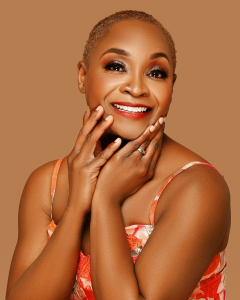
Tyaisha Blount-Dillon has been living with PD symptoms for more than 25 years and was officially diagnosed when she was 35. She lives outside of Atlanta, Georgia, with her husband and 12-year-old son.
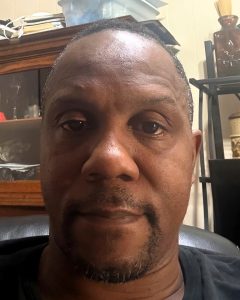
Jerome Chambers has been living with PD symptoms for nearly a decade and was officially diagnosed in his early 40s. He is a father of four and lives in Baton Rouge, Louisiana, with his wife and two youngest children.
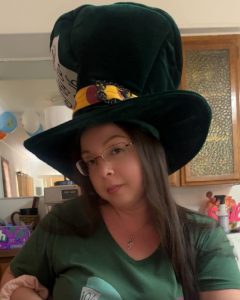
Jennifer Suarez has been living with PD symptoms for nearly 15 years and was officially diagnosed when she was 33. She lives in Southern California and is an empty nester, having raised her niece and nephew, who are now grown.
The Impact of a Parkinson’s Diagnosis Early in Life
Q: What did your life look like at the time of your PD diagnosis?
Tyaisha: I was 35 and pregnant with my son – who is now 12 – when I was initially diagnosed with dopamine-responsive dystonia with parkinsonism. I was later diagnosed with PD following a DAT scan. At the time, my husband and I had been married only a few years and were still navigating the profound loss of our first son, which added a significant emotional layer to an already complex period of life.
Professionally, I was working for the U.S. Forest Service as a Physical Scientist in the Southern Region. I had significant responsibility and had achieved recognition as a result of my contributions.
Collectively, this period represented a convergence of profound personal transition, professional momentum, and increasing responsibility, making my diagnosis particularly disruptive.
During my undergraduate studies, I had at one point pursued coursework toward becoming a Physical Therapist, and that background enabled me to research my symptoms, recognize emerging patterns, and better understand what I might be experiencing. As a result, when I was officially diagnosed with PD, it was not entirely unexpected, but still life-altering.
Jerome: I was officially diagnosed about five years ago, but looking back, I probably had symptoms at least five years before that. At first, I was in denial. My balance was off, and people kept pointing out that I was shuffling my feet, but it wasn’t progressing quickly, so I convinced myself it was nothing. I noticed small things. I didn’t like writing anymore because my handwriting had changed. And when I was in the woods hunting, I’d trip over things I normally would’ve stepped right over without thinking. Still, I just kept pushing through it.
At the time, I was working two jobs. I drove 18-wheelers and worked at a boarding school as a fleet manager, overseeing vehicles and parts of the facility. I’ve always been high-energy and active. I hunted, golfed, ran 5Ks, and worked out regularly in the gym I built at home. Life was busy and full. My wife and I had four kids and two were still living at home. My family had always looked at me like I was Superman.
When a doctor first told me it was Parkinson’s, I almost fired him. I got angry. I didn’t feel like someone with Parkinson’s. Accepting the diagnosis was hard.
Jennifer: When I was diagnosed at 33, my life was full of responsibility. I was the primary caregiver for my father, who was on dialysis three times a week, and I was raising my niece and nephew, making sure they stayed on track in school and had the support they needed. I was also pursuing an associate’s degree in business and taking accounting and computer courses, with the goal of starting my own business one day.
It was a demanding and chaotic time, but also deeply meaningful, because my focus was on supporting my family and creating long-term stability for us. When the tremor in my thumb first appeared in class, it was startling, and my eventual diagnosis meant that my life wouldn’t look exactly like I’d imagined.
Unique Challenges of YOPD
Q: What challenges feel unique to navigating PD at a younger age, and how have you managed or responded to them?
Tyaisha: Navigating PD at a young age presents challenges that extend far beyond symptom management. One of the most significant is the absence of peers who look like you or are experiencing similar realities at the same stage of life, which can be deeply isolating.
This challenge was compounded by dismissal in both professional and medical settings. In the workplace, I often heard comments such as, “you’re too young to have that,” which minimized the legitimacy of my condition. In medical settings, similar dismissal contributed to a long delay in receiving an accurate diagnosis.
As a result, managing PD required not only physical adaptation, but persistent self-advocacy, education, and long-term strategic planning. I relied on these tools to maintain credibility, performance, and forward momentum in systems that were not designed for early-onset or atypical presentations.
Jerome: Being diagnosed younger feels different because you’re not at a stage of life where you’re slowing down – you’re building, providing, and showing up for your family. You still have a lot of life ahead of you.
One of the biggest challenges was that I didn’t “look” sick. So convincing people – and sometimes even myself – that I had PD was difficult. That made it isolating. I went to a support group once at a local library, and when I walked in, I was the youngest person there. Nobody looked like me. I didn’t feel like I fit in, and I didn’t go back.
There were everyday challenges too. People would tell me to “pick your feet up” or “stop dragging your feet.” At first, it embarrassed me. I’d get frustrated. Over time, I learned to just tell people what was going on instead of internalizing it. That helped.
Mentally, I went through some very dark moments. The emotional toll was heavier than the physical symptoms at times. I eventually went to counseling, and that made a real difference. It gave me tools to process what was happening instead of pretending it wasn’t there. In the end, I realized denial wasn’t going to change anything. Accepting the diagnosis didn’t mean giving up. It meant facing it head-on and figuring out how to keep moving forward.
Jennifer: Because I was so young, my diagnosis was a shock. I was used to being the person others depended on. Suddenly, I had to adjust to needing help myself. That shift from being completely independent to relying on support was one of the hardest challenges.
I responded by becoming very proactive in my care. I did extensive research, connected with online communities, and explored therapies and mobility aids that weren’t always offered to me. At one point, medications severely affected my mobility, and I advocated for alternative treatments, which helped me regain function. I’ve learned that self-advocacy is essential. By staying informed, building a support system, and seeking solutions, I’ve been able to maintain as much independence and quality of life as possible.
Impact of PD on Identity
Q: What is the most unexpected way PD has changed your life or sense of identity?
Tyaisha: The most unexpected shift has been a reframing of identity and priorities. Parkinson’s has made me deeply intentional about energy awareness, preservation, and self-efficacy.
I have become a fierce defender of my peace – careful about what I engage in and who I allow into my circle. I intentionally disengage from activities or dynamics that consistently drain more than they give back. This is not avoidance; it is strategic energy management. I am, quite simply, a “no-drama momma.”
By prioritizing self-efficacy, I retain agency over my ability to lead, contribute, and sustain impact. What initially felt like a disruption ultimately became an opportunity to engage more purposefully, with clarity and long-term sustainability.
Jerome: I recently had deep brain stimulation (DBS) surgery, and it has changed my life. It has improved my symptoms and given me back a sense of confidence and freedom. But before DBS, Parkinson’s really took a toll on my quality of life. My feet cramped every day. I was exhausted all the time. For an active person like me, that was hard to accept. It started to chip away at how I saw myself.
So I gave myself a new rule: when you’re feeling down, you get 24 hours to cry, pout, and kick your feet. After that, you get up and do something. That mindset changed everything for me. It shifted me from feeling like a victim of the disease to someone determined to live fully despite it. Parkinson’s changed my perspective. Time suddenly mattered more, and I was forced to be more intentional.
Jennifer: The most unexpected change was learning to accept vulnerability and loss of control. I spent much of my adult life taking care of others – raising my niece and nephew, caring for my father, and managing everything on my own. My identity was rooted in independence and strength. Parkinson’s challenged that.
There are moments when symptoms appear suddenly, like freezing or severe tremors, and I have no choice but to pause and adjust. Those experiences were initially frustrating and emotionally difficult, especially in public settings. But over time, they’ve taught me patience, humility, and self-compassion. I’ve also learned that accepting help doesn’t mean losing strength – it means adapting. It has reshaped my sense of identity, but it’s also helped me discover resilience and a deeper understanding of myself.
Staying Connected, Enjoying Life
Q: What keeps you feeling engaged and connected since your diagnosis, and how have you adjusted the activities or relationships that matter most to you?
Tyaisha: Staying engaged with life has always been rooted in purpose and contribution for me. From an early age, my parents intentionally taught me to be an active and impactful member of society. That expectation shaped how I learned to engage with the world and remains central to how I define fulfillment. As my symptoms progressed, I slowed down significantly, but eventually made the intentional decision to re-engage. That shift came from a clear realization: you only live once, and it is important to live fully.
I prioritize activities that bring me joy, peace, and meaning. I’ve always loved dancing and returned to it about a year ago after a long break. I found a community of dancers who uplift and empower one another, where it doesn’t matter how you dance, only that you try. I’ve grown stronger, more aware of how my body moves in space and time, and more skilled at adapting movement to achieve the results I need, even with Parkinson’s.
In addition, I am proud to have recently co-written The Bayou Bounce with my son. The book humanizes patients and creates space for healthy dialogue around complex issues for both children and adults. I have always loved writing, but PD has made it more physically challenging. As a result, I now rely heavily on speech-to-text tools. It’s humbling, but it allows me to continue doing meaningful work. This adaptation is also important because my son has learning differences and uses similar tools. By using them confidently myself, I show him there is no shame in using tools that help you succeed. It’s not particularly wise to expend unnecessary energy struggling when effective tools are available.
My son is a powerful motivator. Giving up would not teach him perseverance. Continuing through the ups and downs models resilience in action.
Jerome: My family is everything to me. My wife and I have been married for 20 years, and my kids are my biggest motivation. Watching them work hard and find success carries me through some of my hardest days.
Outside of my family, I love to golf, and I use a cart now instead of walking 18 holes. I also have a hunting camp in Mississippi that has become a refuge. I built it with the help of an old friend, and it’s more than a camp – it’s therapy. I go there almost every week to watch the sunrise and just sit quietly in the woods when everything comes alive. There’s a lake on the property and plenty of trails to walk. Being out there gives me space to breathe, think, and reset. Prior to DBS, I stopped going into the woods alone – partly for safety, partly for company – and I’ve learned that leaning on friends isn’t weakness. It takes strength.
Jennifer: Coloring is a cornerstone of my daily life. It’s incredibly therapeutic and helps me manage stress, stay creative, and maintain a sense of calm and control. Even just a few minutes each day makes a difference. PD tremors and stiffness sometimes make it difficult to hold tools steady, but I’ve learned to work with different mediums depending on what my body allows that day. Some days are easier than others, and I’ve learned to be patient with myself.
Staying connected has been essential for my mental and emotional well-being. I’ve built strong connections through online communities. I run my own Parkinson’s-related social media pages (Facebook and YouTube) where I share my coloring, upload videos, and connect with others who are navigating similar challenges. People reach out to ask questions, and I’m able to help guide and support them, which gives me a sense of purpose. I also create and donate coloring bags to children and single mothers in my community, and I review coloring products and share resources with others. Helping others reminds me that I still have valuable skills and contributions to offer, and it gives me a sense of empowerment.
Advice for Newly Diagnosed People with YOPD
Q: What advice would you give to someone newly diagnosed with YOPD?
Tyaisha: First, know that a diagnosis is not the end of the world. It is not a timeline of doom. You can live a happy, healthy, and functional life with Parkinson’s.
The key is doing the right things for you: building a strong support system, working with professionals you trust, speaking up for what you believe is best for your care, exercising – like the dickens! – and prioritizing proper nutrition, whatever that means for you personally.
Most importantly, advocate for yourself and take an active role in shaping your journey. With the right actions and mindset, you can still live well.
Jerome: Don’t give up. It’s not the end of the world. Parkinson’s is part of the story, but it’s not the whole story. And remember, when you’re feeling down, give yourself 24 hours to cry, pout, and kick your feet. After that, get up and do something. Face it head-on.
Jennifer: My advice would be to stay proactive and become your own advocate. Educate yourself, research treatment options, and don’t be afraid to ask questions or seek alternatives. Sometimes the best solutions come from your own persistence and willingness to explore.
Most importantly, don’t lose your sense of purpose. Find something that brings you peace and fulfillment, whether it’s art, helping others, or learning something new. PD may change how you live your life, but you can still live your life!
Gratitude & Optimism
We are so grateful to Tyaisha, Jerome, and Jennifer for sharing their insights and perspectives. Their stories remind us that while PD brings real challenges, it can also reveal resilience, purpose, and possibility in powerful ways. We thank them for helping us launch Parkinson’s Perspectives with such openness and generosity, and we look forward to continuing to share the voices of those navigating life with PD.
Tips & Takeaways
- When someone is diagnosed with Parkinson’s disease (PD) before age 50, it is known as young onset Parkinson’s disease (YOPD), or early onset PD. Managing PD at an earlier age can come with unique challenges, such as managing family and career throughout disease progression.
- A PD diagnosis, even at an earlier age, does not mean that life is over. There are many ways to live well with PD. While PD brings real challenges, it can also reveal resilience, purpose, and possibility in powerful ways.
- Find ways to stay active and connect with others by reaching out to an APDA Chapter, visiting our Virtual Events Calendar, or contacting APDA at apda@apdaparkinson.org.
- Learn more about YOPD here.
- Stay tuned for more installments of our new Parkinson’s Perspectives blog series!