



Parkinson’s research happening at Washington University’s APDA Center for Advanced Research
The American Parkinson Disease Association (APDA) is proud to support nine Centers for Advanced Research which, along with a variety of funded grants and fellowships, are the backbone of our research program. At the Centers, some of the most compelling Parkinson’s disease (PD) research is underway – research that keeps us optimistic and gives us hope for the future.
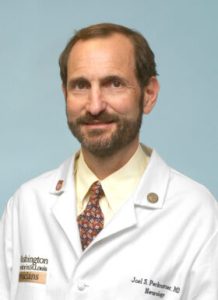
Each one of our Centers conducts an exceptional array of research activities, and we hope to highlight each one through the A Closer Look blog. Today we will spotlight the APDA Center for Advanced Research at Washington University in St. Louis, MO, directed by Dr. Joel S. Perlmutter. With a wide range of projects, and a team spanning multiple disciplines, this Center is pushing the boundaries of what’s possible in PD research and care.
Why This Center Matters for Parkinson’s Research
Washington University brings together neurologists, radiologists, neuropsychologists, physical therapists, occupational therapists, chemists, and data scientists under one roof. Together, they’re tackling PD from every angle:
- Finding biomarkers to track the disease progression
- Studying the brain’s chemistry through imaging and tissue analysis
- Exploring how exercise and rehabilitation improve symptoms
- Testing new treatments and drugs in both animal models and people
- Training the next generation of PD specialists
Biomarkers: The Key to Better Care
One of the center’s biggest focuses is developing biomarkers—objective measures that can track PD progression or predict outcomes. Just like cholesterol tests help doctors manage heart disease, biomarkers for PD could revolutionize care by:
- Diagnosing the disease earlier
- Monitoring how fast it progresses
- Identifying which treatments are working best
The Washington University team is especially interested in neuroimaging biomarkers. Using advanced PET and MRI scans, they’re able to study brain inflammation, abnormal protein buildup (like A-beta amyloid and with others, working on new PET radiotracers for alpha-synuclein), and changes in neurotransmitters.
Importantly, they’ve developed several new brain tracers—one already FDA-approved for human use—that could allow doctors to see PD activity inside the brain like never before. This progress could one day give doctors and patients a clear roadmap for how the disease is unfolding and whether a therapy is actually slowing progression.
Tackling Cognitive Decline
Movement symptoms often get the most attention, but many people with PD also experience cognitive changes, including memory loss and dementia. Washington University researchers are leading multiple studies to understand and treat these challenges.
Projects include:
- Investigating why some people develop dementia with PD while others do not
- Exploring how prospective memory (remembering to carry out future intentions) declines in PD
- Studying the effects of deep brain stimulation (DBS) not just on movement, but on thinking and memory
For example, Dr. Erin Foster at WashU has pioneered research on memory interventions in PD and even created patient-friendly guides to help people manage day-to-day cognitive challenges. For patients and families, these insights mean new strategies to preserve independence and quality of life.
The Power of Exercise and Rehabilitation
It is not always about drugs or devices for treatment options. Exercise and movement can help tremendously in patient outcomes when incorporated correctly. Dr. Gammon Earhart and her team are testing physical rehabilitation strategies that focus on gait and balance. Some of their innovative projects include:
- Using rhythmic cues (like singing or stepping to a beat) to improve walking
- Quantifying gait changes to track disease progression
- Studying how physical therapy helps PD patients after DBS surgery
Their findings are already influencing how therapists treat people with PD worldwide. They show that structured, intentional exercise can reshape the brain and help preserve function—reinforcing the message that movement is one of the most powerful tools against PD.
The Brain Bank: A Priceless Resource
Another cornerstone of the Washington University program is its Movement Disorders Brain Bank, which has collected more than 550 donated brains from people with PD and other related disorders.
Because these donors were followed closely in life—with detailed movement exams, imaging, and cognitive testing—researchers can now match what was seen clinically with what’s found under the microscope.
This powerful pairing helps uncover how PD unfolds at the cellular level and has already led to discoveries about Lewy body pathology, inflammation, and genetic factors. For families, brain donation is a way to leave a lasting legacy that accelerates progress for future generations. To find out more about joining this study and contributing to this data, you can email Kelly Wiest at nil-PDresearch@email.wustl.edu.
Collaboration Across Disciplines
The Washington University center is a great model of collaboration. Their faculty roster includes more than 40 specialists across a variety of fields. This is imperative for attacking the disease from different angles and understanding progression and treatment from different perspectives.
They share cutting-edge facilities, including:
- Neuroimaging labs with state-of-the-art PET and MRI scanners
- A radiochemistry lab that develops new tracers for brain imaging
- Neurochemistry and histology labs for tissue studies
- A comprehensive patient database with more than 30 years of clinical/research data
This shared infrastructure means discoveries move faster from the lab to the clinic in a more confident and reproducible manner for greater chances of successful therapy options.
Training the Next Generation of Parkinson’s Researchers
Washington University also trains undergraduates, medical students, residents, and fellows, with more than 85% of fellows going on to academic careers. By investing in future leaders, the center ensures PD research and care will keep advancing for decades to come.
The Goal: Improve the Lives of People with Parkinson’s Disease
From all the research, every project at Washington University shares the same goal: to improve the lives of people with PD.
Thanks to APDA’s seed funding and the dedication of this multidisciplinary team, patients are provided with more options and continued hope that better treatments and prevention measures are on the horizon.
Tips & Takeaways
- APDA funds nine Centers for Advanced Research, one of which is at Washington University. These Centers are on the forefront of PD research.
- Biomarkers are vital for the future for PD treatment and prevention. Imaging scans and blood tests may soon help doctors personalize PD treatment.
- Rehabilitation strategies can be designed to significantly improve walking and balance.
- DBS is constantly evolving as researchers are studying not just how it affects movement, but how it impacts memory and thinking.
- Brain banks provide critical insight into PD and drive discoveries that benefit future generations.
- By combining imaging, genetics, rehab, and clinical care, APDA’s Center for Advanced Research at Washington University is moving research from lab to real life.
- You can learn more about APDA’s Centers for Advanced Research and the other research grants we fund on our website.
This blog was written by Clark Jones, PhD, and was reviewed, edited, and approved by Dr. Rebecca Gilbert.