



How food prep and cooking techniques can make eating safer
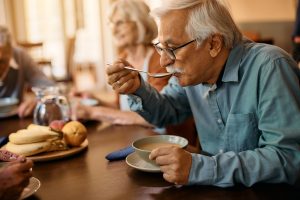
Swallowing difficulties, also known as dysphagia, can unfortunately develop as Parkinson’s disease (PD) advances. These challenges can make eating stressful, reduce enjoyment of meals, and increase the risk of choking, dehydration, and aspiration pneumonia. Fortunately, taking proactive steps with food preparation and cooking techniques can make eating safer and more enjoyable.
Why swallowing problems happen in Parkinson’s
Swallowing relies on precise coordination between the mouth, throat, and esophagus. PD can slow these movements and/or make them dis-coordinated. This, in turn, can make it harder to chew food thoroughly and/or move it through the correct pathway while protecting the airway during swallowing.
Some common signs of difficulty swallowing include:
- Slow rate of eating
- Fatigue during eating or decreased enjoyment of food
- Coughing or excessive throat clearing during meals
- A sensation that food is sticking in the throat
- Drooling
- Unexplained weight loss
- Difficulty swallowing pills
- Changes in food preferences
More advanced stages of swallowing difficulties could lead to choking episodes with eating. Aspiration pneumonia caused by food entering the airway instead of the gastrointestinal tract can also be a serious consequence of swallowing difficulties. Either of these two situations should immediately lead to an evaluation of swallowing difficulties, as they pose significant risks for the person with PD.
Since swallowing changes can occur gradually, many people adapt to these changes without even noticing them. It is important to recognize these signs early to make the appropriate adjustments needed to reduce risks and help maintain nutrition and hydration.
What to do if swallowing difficulties are suspected
If swallowing difficulties are suspected, the first step is an evaluation by a speech-language pathologist (SLP). An SLP can perform various tests to evaluate swallow including a Modified Barium Swallow Study (MBSS) or Videofluoroscopic Swallow Study (VFSS) in which the person swallows barium-coated foods/liquids followed by a series of X-rays to visualize the structures involved in swallowing.
A Fiberoptic Endoscopic Evaluation of Swallowing (FEES) may also be performed, in which a thin, flexible camera is passed through the nose to directly view the swallowing mechanisms. Following an evaluation, the SLP will recommend various food textures as well as techniques to improve swallow. Swallow therapy might also be indicated to help improve swallowing.
Choosing the right food textures
Texture is one of the most important factors in safe swallowing, and an SLP will guide you as to which food textures are best for you. Types of foods that are good to avoid if you have swallowing difficulties include excessively dry, crumbly, sticky, and hard to chew foods. In all these cases, these foods increase the risk of choking or aspiration.
In contrast, soft, moist foods tend to move through the mouth and throat more easily, but you’ll want to be sure to choose foods that also have nutritional value
Foods that are often easier to swallow while maintaining nutrition include:
- Soft fruits
- Tender fish
- Ground meats with sauces
- Yogurt
- Oatmeal
- Mashed potatoes
- Scrambled eggs
- Soups
- Stews
- Smoothies
Adding moisture with broth, gravy, yogurt, or sauces can make many foods safer and more comfortable to eat.
What type of foods are difficult to swallow for people with dysphagia?
Foods that are often harder to swallow include dry meats, crackers, chips, nuts, popcorn, crusty bread, rice, a thick layer of peanut butter, raw vegetables, and mixed textures like cereal with milk or soups with chunks. Given the nutritional value a lot of these foods contain, they shouldn’t be excluded from your diet. These foods may still be enjoyed with modifications to make them easier to swallow. Modifications to dry food that can help with swallowing difficulties include:
- Blending or pureeing
- Chopping finely, mashing, or mincing
- Adding moisture such as gravy, sauces, or creams
Cooking Techniques That Improve Safety
How the food is cooked can make as much difference as what food is chosen. Moist cooking methods such as steaming, braising, slow cooking, stewing, and baking in covered dishes help keep foods tender and easier to chew.
Using a slow cooker or pressure cooker is especially helpful for making meats soft enough to fall apart easily. Blending soups and sauces can create smooth and nourishing meals that require minimal chewing. For certain foods like chicken, beef, or vegetables, chopping finely or shredding after cooking can also improve swallow safety.
It is best to avoid dry cooking methods like grilling without added moisture. Toasted or crusty foods may need softening with things such as broths or spreads.
Temperature also matters. Some people swallow better when foods are warm or cold rather than room temperature, and strong flavors may improve swallowing reflexes in some individuals as well. It is important to understand what works for you and learn from trial and error.
Tips for Maintaining Nutrition and Hydration
People with PD who have swallowing difficulties tend to decrease the amount of food that they eat or drink. In addition, people with PD may have a slowed rate of eating, which also creates challenges in maintaining sufficient caloric intake. These changes can greatly increase the risk of weight loss, dehydration, and malnutrition. It is important to focus on nutrient-dense foods that provide calories, protein, vitamins, and minerals in smaller volumes.
Smoothies made with yogurt, milk, nut butter, fruit, and protein powder can be filling, easy to swallow, and nutritious. Soups with blended vegetables, beans, lentils, and meats provide hydration and nutrition at the same time. Mashed avocado, cottage cheese, eggs, hummus, and soft tofu are good sources of healthy fats and protein.
These are just suggestions, and everyone’s preferences are different, so it is important to find techniques and combinations that work for your specific situation. Registered dietitians and speech-language pathologists can work together to ensure that meals are both safe and nutritionally adequate.
Making Meals Enjoyable and Social
Swallowing changes can affect more than nutrition. They can take away pleasure from eating and make people hesitant to eat with others. Incorporating nuances and creativity in cooking can help preserve the social and emotional aspect of meals.
Focusing on flavor through herbs, spices, citrus, and aromatic ingredients can make soft foods more appealing. Attractive plating, even for blended foods, can improve appetite and enjoyment. Eating in a calm environment, taking small bites, sitting upright, and allowing plenty of time for a meal can also improve comfort and safety.
Cooking together or sharing meals with family and friends helps maintain connection, even when food textures need to change. Family members can help by providing new ideas that appeal to everyone while implementing changes that help with these swallowing difficulties.
Tips & Takeaways
- Swallowing difficulties are common in advanced PD and can affect safety, nutrition, and quality of life.
- A speech-language pathologist can assess swallowing and guide safe food and liquid choices.
- Soft, moist foods are generally easier and safer to swallow than dry, crumbly ones.
- Cooking methods like steaming, stewing, braising, and slow cooking help make foods tender and easier to chew.
- Adding sauces, gravies, broth, yogurt, or purees improves moisture and swallowing safety.
- Nutrient-dense foods such as smoothies, soups, eggs, yogurt, beans, and soft fish help prevent weight loss and dehydration.
- With thoughtful preparation, meals can remain enjoyable, social, and nourishing despite swallowing challenges.
- You can learn more about swallowing in this special webinar hosted by two speech-language pathologists.
This blog was written by Clark Jones, PhD, and was reviewed, edited, and approved by Dr. Rebecca Gilbert.