



A Closer Look at APDA’s Unique Research Funding Presented at the World Parkinson Congress in 2026
The World Parkinson Congress (WPC) is an international conference that takes place every three years and brings together researchers, clinicians, people with Parkinson’s disease (PD), care partners, and PD advocates to share information on the science of PD as well as the best clinical, wellness, and exercise practices to better the lives of people with PD. It is unusual for a conference to be geared toward both people with PD and medical professionals, which is one of the unique things about WPC. The 2026 WPC just took place at the end of May in Phoenix, AZ, and was attended by more than 4,000 people!
One of the key ways in which this diverse PD community is able to share their ideas and initiatives during the WPC is through poster sessions that take place throughout the conference. Poster concepts (called abstracts) must be submitted to a review committee and approved prior to the conference. The American Parkinson Disease Association (APDA) presented nine posters during these sessions, with each one highlighting a unique aspect of APDA’s research or program initiatives. We want you to know about these initiatives as well and will share two of these poster presentations today.
Poster 1: Protecting Scientific Momentum During Funding Uncertainty
Research is dependent on a consistent funding stream. If a researcher is not able to maintain funding, years of work may be in jeopardy as projects that are mid-stream cannot be completed. If funding is not secure, a researcher may need to leave PD research for a different field with more consistent funding, or even more sobering, need to leave the research world altogether.
To better understand and quantify how vulnerable the PD research community is to inconsistent funding, APDA surveyed 74 investigators in May 2025. The survey showed that:
- 76% of the researchers reported experiencing disruptions to their research
- 51% of the researchers had lost institutional or individual funding
In response to this difficult funding climate for PD research, APDA launched the Bridge Funding Award program to sustain promising investigators who had previously been funded by APDA and who now face unexpected gaps in support. These awards ensure that critical research continues without interruption.
APDA Bridge Funding Program
APDA’s first bridge funding awards supported three projects beginning in January 2026:
- Donghe Yang, PhD, Memorial Sloan Kettering Cancer Center, studying the development of human dopaminergic neurons from stem cells.
- Helen Hwang, MD, PhD, Washington University, investigating cerebrospinal fluid biomarkers for Parkinson’s disease
- Franchino Porciuncula, PT, DScPT, EdD, Boston University, examining whether rhythmic auditory stimulation can reduce the cognitive demands of walking in people with PD
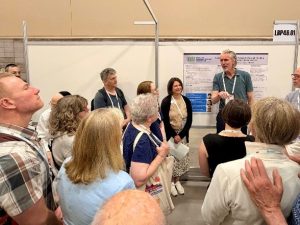
More generally, because of current funding uncertainties from other sources, researchers have been turning to APDA for potential support in record numbers. APDA received 290 letters of intent for research funding in 2025, including 220 from US-based investigators. In 2026, submissions increased to 366, which were all from US-based researchers. This represented:
- A 26% increase in total applications
- A 66% increase in applications from US-based investigators
These statistics suggest that funding instability remains widespread. In response, APDA continues to be committed to supporting researchers at vulnerable points in their careers in order to maintain a research community dedicated to uncovering the causes and discovering new treatments for PD.
Poster 2: Beyond the Bench: Social Science & Diversity Research Initiatives
APDA identified two major gaps in Parkinson’s research and developed funding mechanisms to address them:
- The need to better understand PD in communities traditionally excluded from research, which led to the development of the APDA Diversity in PD Research Grant
- The psychosocial challenges that shape daily life with PD, such as caregiver burden, stigma, and mental health which led to the APDA Social Sciences in PD Research Grant
Diversity in PD Research Grant
APDA’s Diversity in Parkinson’s Disease Research Grant has been awarded yearly since 2020 to support a research scientist studying the health disparities and/or differences among under-studied PD communities.
So far, the program has already:
- Awarded 8 grants
- Generated 8 peer-reviewed publications
- Accumulated 158 citations
These numbers reflect more than academic productivity. They represent new knowledge that is helping broaden understanding of PD across diverse populations. Funded projects have examined a variety of topics including:
- Clinical and cognitive characteristics of PD in Mexico
- Utilization of rehabilitation services across diverse communities
- Engagement in research among people of color
- Use of deep brain stimulation among minority populations
- Physical activity among Latino individuals with PD and their caretakers
- Machine learning approaches to predict levodopa-induced dyskinesia in Latino populations
- Access to advance care planning among Hispanic individuals with PD
- Shared decision-making among women with PD
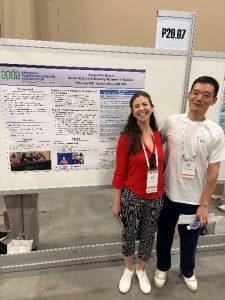
The impact of this work goes far beyond grants and publication statistics. It helps identify barriers to care, treatment, and research participation that can make vital impacts in diverse patient populations. By broadening representation in research, this work helps ensure that scientific findings reflect the experiences of all people living with PD—not just those traditionally included in studies.
Social Sciences in PD Research Grant
There has been a lot of progress in understanding the biological mechanisms underlying PD, but living with this disease involves much more than just motor symptoms and brain pathology. Many factors including impacted quality of life, caregiver stress, mental health challenges, stigma, communication difficulties, and decreased access to support systems all influence the daily experiences of people affected by PD.
To address this, APDA introduced the Social Science in PD Research Grant in 2025, which is awarded to investigators addressing the critical social challenges faced by individuals living with PD and their care partners. The impact of this initiative lies not only in the projects themselves, but also in the recognition that these issues deserve scientific attention alongside traditional research. Potential areas of research for this grant include:
- Mental health and resilience
- Caregiver experiences and coping mechanisms
- Social interaction and stigma
- Communication strategies for people with PD and their families
- Support systems and interventions that improve quality of life
- Policies and programs aimed at promoting social well-being
The first APDA Social Science in PR Research grant was awarded just last year to support work addressing: Advanced recreation therapy balance and fall-prevention programs for people with PD in small cities.
Building a More Inclusive and Resilient Research Environment
These posters presented at WPC demonstrate that the impact of APDA research funding extends beyond individual grants. Bridge funding helps protect scientific discovery and momentum during common periods of uncertainty. Diversity-focused initiatives broaden the understanding of PD across historically underrepresented populations. Social science research helps provide a more complete picture of living with PD, including quality of life, communication, and caregiver experiences. The full impact of this work is just beginning to emerge and will continue to be evaluated to ensure patients and researchers are given the tools and insights to have the best possible outcomes.
Tips & Takeaways
- APDA presented nine exciting and impactful projects via poster sessions at WPC 2026
- Funding gaps can threaten promising discoveries, and bridge funding helps maintain scientific momentum
- Including diverse populations in research strengthens PD research and improves understanding of the disease
- Inclusive research benefits the entire PD community
- Social aspects of PD are just as important to address as motor symptoms
- Broadening who is studied as well as what is studied helps create a more complete picture of PD
- Today’s investments help drive tomorrow’s discoveries and care strategies
- If you are interested in supporting APDA’s research efforts, please make a donation today.
This blog was written by Clark Jones, PhD, and was reviewed, edited, and approved by Dr. Rebecca Gilbert.